The Seasonal Workspace Reset: Preparing Your Home Office for Autumn and Winter
October arrives quietly in a home office. The window that threw light across your desk in June is grey by half past three, the radiator clicks on at odd hours, and the pile of paper you meant to deal with in September has settled in for the winter. None of this is dramatic on its own. It just accumulates, and by January you are working in a room that no longer suits the way you use it.
A seasonal reset takes an afternoon. It is not a spring clean with a different name; it is a deliberate adjustment for shorter days, colder air and more hours spent indoors. Done well, it is the difference between a workspace that carries you through to March and one you quietly start avoiding.
Summer habits rarely survive the clocks going back. In July you could work anywhere — the kitchen table, the sofa, the garden bench. By November you are back at the same desk for longer stretches, under lighting you chose when daylight was doing most of the work.
Three things shift at once: the light, the temperature and the noise. Windows stay shut, the heating comes on and dries the air, and everyone else in the house is indoors too. Your setup needs to answer all three. The good news is that none of it requires new furniture or a bigger budget — mostly it requires you to notice what has quietly stopped working.
Light is the single biggest influence on how a home office feels between October and February, and a single ceiling bulb is rarely enough. It lights the room; it does not light your work.
Add one good task lamp and place it so the light falls on your keyboard and papers rather than across your screen. If you are right-handed, a lamp to the left throws fewer shadows over what you are writing. Check for glare: tilt the shade, move the lamp forward, and if you can still see a bright reflection in the monitor, shift the lamp rather than your head.
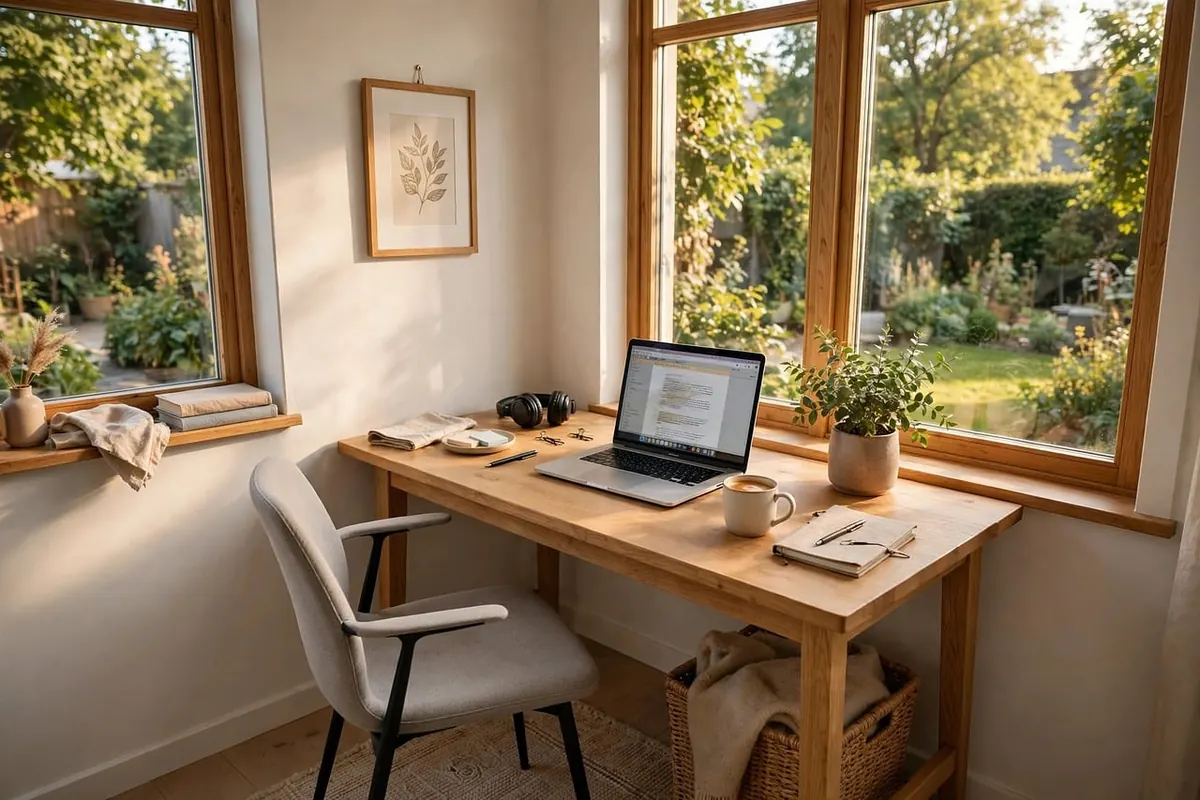
Where possible, position the desk so you sit side-on to the window rather than facing it or turning your back on it. Facing the glass means a screen competing with the sky; turning away means you never see daylight at all. If your desk cannot move, open the curtains fully first thing and stand by the window for a few minutes before you sit down.
For the evening hours, a warmer bulb is easier on tired eyes than a cold white one, and a small lamp behind you softens the contrast between a bright screen and a dark room. If the shorter days leave you feeling persistently flat, low or unlike yourself — and it lasts more than a couple of weeks — that is worth discussing with your GP rather than pushing through.
You will be in this room far more over the next five months. Clutter that was invisible in the summer becomes a daily irritant when you are staring at it in artificial light. Give the job a structure:
Then deal with the cables. A tangled nest behind the desk is the most common reason a workspace feels messy even when the surface is clear. Unplug, untangle, and secure what is left with ties or a clip so nothing trails across your feet. Tuck a spare charger and a spare pair of glasses somewhere you will actually remember.
Finally, pack away the seasonal clutter: summer paperwork you will not touch, the fan, the sun hat, the beach bag that migrated indoors in September. One labelled box is enough. Put it somewhere out of sight and note what is in it.
A whole room heated to your ideal temperature is expensive and rarely necessary. A small heater or foot warmer near your chair, a decent jumper and a blanket on the back of the chair will keep you comfortable for a fraction of the cost. Keep any heater clear of cables, paper and curtains, and never leave one running unattended. If you use an electric blanket or a heated pad, check it for wear before the season starts.
Do not block radiators with furniture, and if your desk sits over a cold floor, a footrest or a rug underneath makes more difference than turning the thermostat up another degree.
Sealed rooms get stale, and dry air makes long screen sessions harder on your eyes and throat. Open a window for five minutes once or twice a day, even in the cold — a short burst of fresh air beats hours of stuffiness. A small humidifier, a bowl of water near a radiator or a few plants can all help, particularly if your eyes feel gritty by mid-afternoon. Keep a glass of water on the desk and refill it; it is an easy habit that solves two problems at once.
Your best thinking hours have probably shifted. Morning light is scarce, so protect it: schedule demanding work — writing, planning, anything that needs concentration — for the first part of the day while it is still bright, and keep meetings and admin for the mid-afternoon slump.
Get outside at lunchtime, even for ten minutes. Daylight exposure during the day supports better sleep at night, and the walk resets your eyes after hours at close range. Set an alarm for it if you need to; it is easy to skip when it is cold and you have "just one more thing".
Finish with a proper closing ritual. Write tomorrow's three priorities, close the laptop, switch off the task lamp and leave the room. In winter, a workspace that never quite shuts down bleeds into your evenings more than it does in summer, and that is the fastest route to a desk you dread sitting at in the morning.
Block two hours, ideally on a bright weekend morning, and work through this in order:
Do this once and the darker months stop feeling like something to endure. The room fits the season, your routine fits the light, and the only thing left to do is the work itself.
Photo: ehabk / Pixabay
Previous Post
Desk Setups for Video Calls: How to Look Professional in a Small Space
Next Post
Office Views: How to Improve Your Background When You Have No Window