How to Set Up a Home Office in a Rented Flat Without Drilling Walls
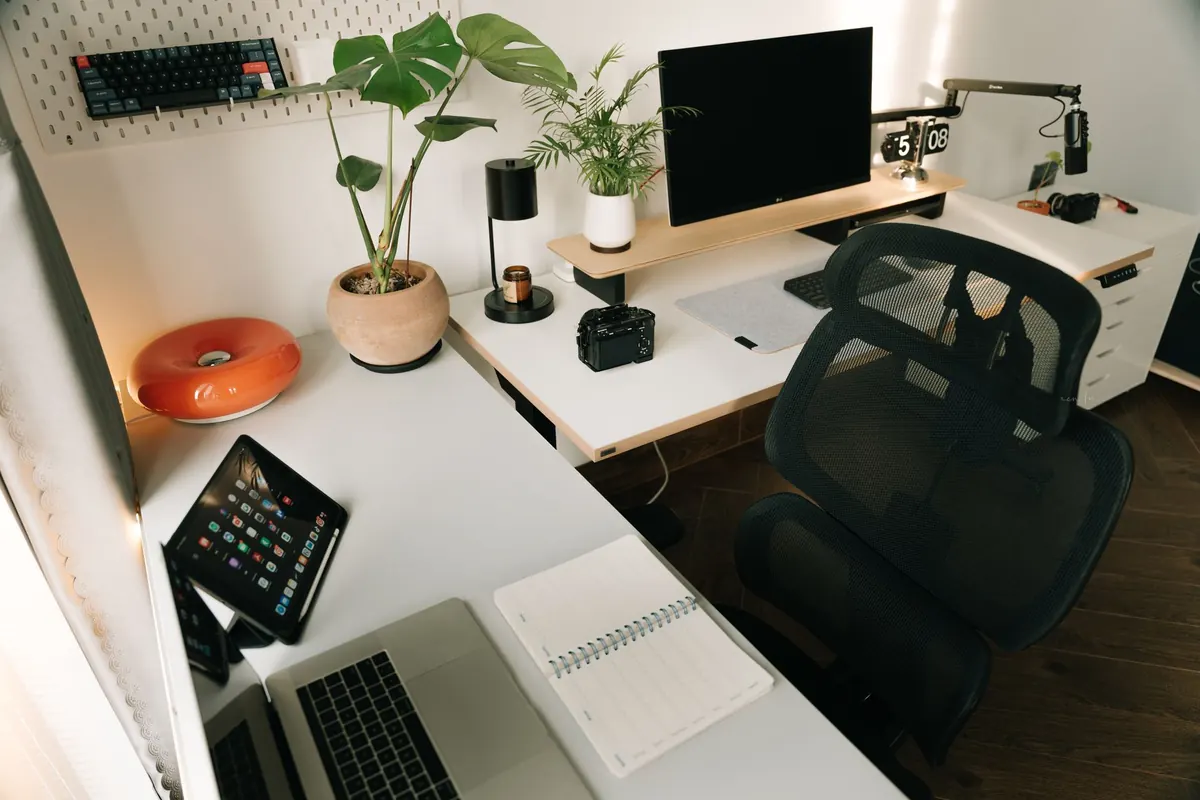
Renting often means working with the room you have: a box room off a hallway, a living space that doubles as a bedroom, a Victorian conversion with a sash window and one stubborn radiator. That is no reason to spend your week hunched over a laptop on the sofa. With a little planning, you can build a desk setup that feels permanent but comes apart in an afternoon — no drill, no wall plugs, no awkward conversation when the deposit inspection comes round.
Before you order anything, walk the room with a tape measure and note four things: where the sockets are, where the radiator sits, which way the door swings, and how much floor space is genuinely free once your bed or sofa is in place. Sockets usually decide the layout for you, because trailing mains leads across a walking route is the fastest way to make a small flat feel cramped.
Think about the window as well. Sitting directly facing a bright window will leave you squinting at a silhouetted screen; sitting with your back to it puts glare on the monitor and light on your camera during calls. A desk placed perpendicular to the window — so the light falls across your shoulder — is the easiest compromise in a room that is short on options. Leave a clear gap of at least 10cm around radiators and storage heaters, and never park a desk in front of one.
Anything freestanding is your friend. A simple table with four legs, a slim writing desk, or a worktop on two trestle legs will all do the job without a single fixing. Aim for a depth of 50–60cm: deep enough for a laptop plus a second screen, shallow enough to leave a walkway in a narrow room.
Cables are where most renter setups turn messy. The trick is to plan the whole run before you peel anything off its backing paper, and to keep weight off anything adhesive. That means power first, data second, tidying third.
Stick a single clip somewhere hidden — behind a chest of drawers, say — and leave it for 24 hours. If it holds and lifts cleanly, do the rest. When it is time to remove anything, warm it gently with a hairdryer, peel slowly and at a low angle, then dab residue with a little label remover or white spirit on a cloth. Test any solvent on a hidden patch of paint first, because some emulsions and vinyl finishes mark easily.
Rented flats rarely have enough cupboards, so choose storage that is portable and stackable rather than built in. A trolley on castors makes an excellent desk caddy for printer paper, chargers and notebooks, and it slides out of sight when you finish for the day.
Keep the space in front of your meter cupboard and fuse box clear. It is easy to forget in a small room, and you will resent moving a shelving unit at the worst possible moment.
Many rented rooms come with a single pendant light, which is rarely enough at desk level. A freestanding or clip-on lamp with an adjustable arm makes a real difference, particularly in winter. Position it so the bulb is shielded from your eyeline and the light lands on the keyboard rather than the screen.
Hard floors, high ceilings and bare walls make small flats echo, which is noticeable on calls. A rug, a pair of curtains and a couple of soft furnishings absorb some of it. If you are on a call-heavy schedule, a headset with a boom microphone does more for how you sound than any amount of rearranging. On heating, follow the guidance that comes with any portable heater, keep it away from fabric and cables, and never block a radiator you are relying on.
Read your tenancy agreement for anything about fixing items to walls, and if you are unsure, ask the landlord or agent in writing and keep the reply. Adhesive strips and clips are usually fine, but they are not magic: on fresh paint, cheap vinyl or textured wallpaper they can lift the surface when removed.
Take dated photographs of the wall or skirting before you start, keep the removal instructions that come with the pack, and store your kit somewhere you can find it at the end of the tenancy. Rules on damage and deposits vary, and disputes are handled case by case, so if a disagreement arises, your deposit protection scheme or a tenants' advice service can explain the process. For anything beyond that, take proper advice.
The whole approach comes down to a few habits: measure the room, let the sockets choose the layout, buy furniture that stands up by itself, and keep anything adhesive lightly loaded. Plan your cable route on paper before you peel a single strip.
Keep a small undo kit in a drawer — hairdryer, plastic scraper, label remover, a clean cloth — and you can return the room to how you found it in an hour or two. In the meantime, you get a proper desk, a decent lamp and a place to put your coffee that is not the floor. That is a home office worth having, whether you stay another six months or another six years.
Photo: Alpha En / Pexels